The idea of placing data centers in space once belonged to the realm of science fiction—an imaginative solution to earthly constraints that seemed permanently impractical. Today, that idea is resurfacing in serious discussions among aerospace engineers, government agencies, and private-sector strategists. At the center of this renewed interest is SpaceX, whose dominance in launch services and satellite infrastructure has fundamentally altered the economics of space.
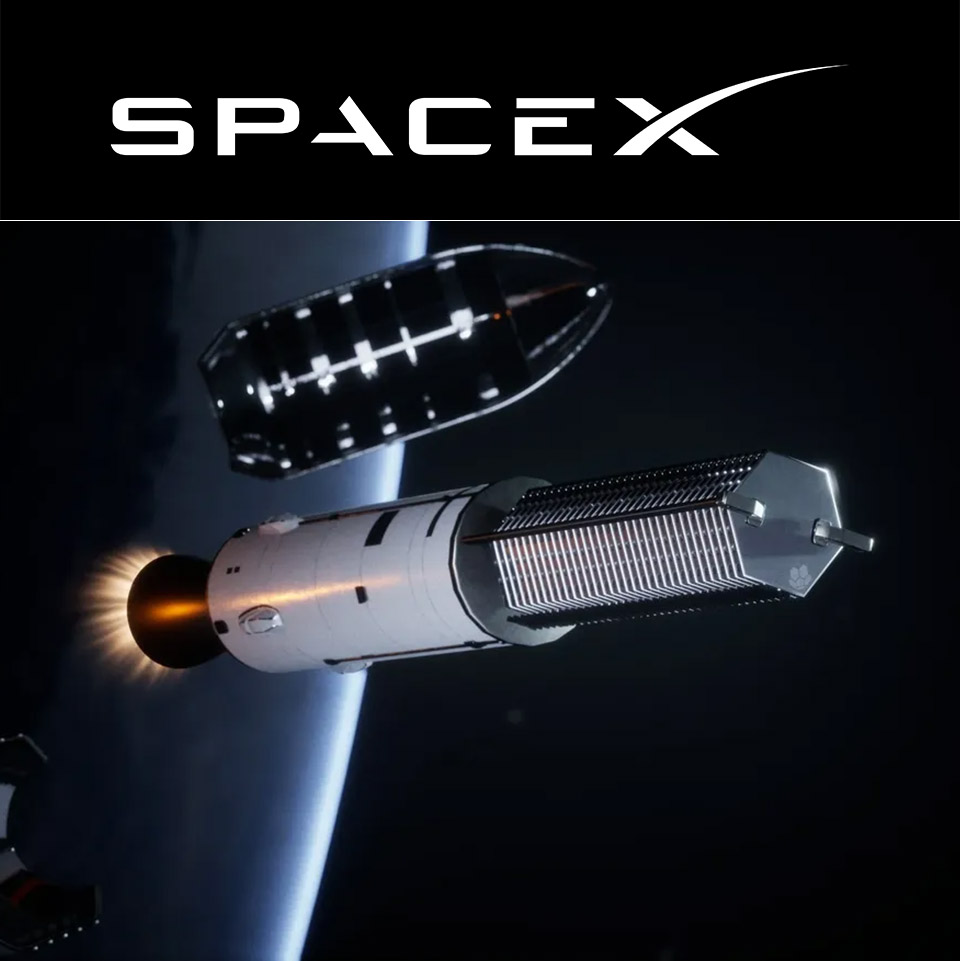
While SpaceX has not announced a formal program to deploy space-based data centers, multiple industry analysts confirm that the concept is being actively explored across the aerospace and defense ecosystem. The question is no longer whether it is technically conceivable, butwhy now—and whether the benefits justify the complexity, cost, and risk.

Why Data Centers Are Becoming a Problem on Earth
Global demand for data processing has grown exponentially, driven by artificial intelligence, cloud computing, and real-time analytics. Modern data centers consume enormous amounts of electricity and water, placing pressure on power grids and local ecosystems.
In some regions, data centers now compete directly with residential and industrial users for energy and cooling resources. Governments have begun restricting new construction due to environmental concerns, creating bottlenecks for future expansion.
Earth-based infrastructure is reaching physical and political limits,” said a technology policy analyst. “That’s why alternatives are being explored.”
Space-based data centers are one such alternative—not as replacements, but as potential supplements.
Why SpaceX Makes the Concept Plausible
For decades, the primary obstacle to orbital infrastructure was cost. Launching heavy equipment into space was prohibitively expensive, making large-scale computing platforms unrealistic.

SpaceX changed that equation.
Reusable rockets such as Falcon 9 have reduced launch costs dramatically, while the company’s next-generation Starship system is designed to lower them further. For the first time, transporting large, modular hardware to orbit is no longer economically absurd.
Without SpaceX, this conversation wouldn’t be happening,” said a space economist. “Launch cost was the gatekeeper.”
Equally important is Starlink. With thousands of satellites already in orbit, SpaceX operates a global communications backbone capable of transmitting vast amounts of data—an essential prerequisite for orbital computing.
What “Space-Based Data Centers” Really Mean
Despite dramatic headlines, no credible proposal envisions massive server farms floating freely in orbit. Instead, current exploration focuses on specialized, modular computing units designed for narrow use cases.

These include:
Processing Earth-observation data directly in orbit
Supporting autonomous satellite operations
Handling military or intelligence workloads requiring extreme physical security
Performing AI inference on space-generated datasets

This is edge computing, not cloud replacement,” said a former aerospace systems engineer.
By processing data where it is collected, space-based systems could reduce bandwidth demands and latency, especially for applications that already operate in orbit.

Power: Solar Energy’s Promise—and Limits
One of the strongest arguments for space-based data centers is access to continuous solar power. In orbit, solar arrays can generate energy almost constantly, without weather disruption or nighttime loss.
However, energy abundance does not equal energy usability. Large solar arrays add mass and complexity, while energy storage remains necessary during orbital eclipses.
“The power is there,” said an electrical systems specialist. “The challenge is managing it reliably over years, not days.”
Radiation exposure also degrades solar panels and electronics over time, shortening operational lifespans compared to Earth-based facilities.
Cooling: The Hardest Problem
Cooling is often misunderstood in public discussions. While space is cold, it does not absorb heat easily. Without air, heat must be dissipated through radiation—requiring large, heavy radiator surfaces.

High-performance processors generate enormous heat, making cooling one of the most significant engineering challenges for orbital computing.
Cooling, not computing, is the bottleneck,” said a thermal engineer who has worked on satellite systems.
This limitation suggests early space-based data centers would handle lower-density, specialized workloads, not general-purpose cloud computing.

Security and Legal Ambiguity
One of the quieter drivers of interest is security. Space-based data centers would be physically difficult to access, tamper with, or sabotage—an appealing feature for sensitive applications.
However, this raises complex legal questions. Data sovereignty laws are based on geography. Orbit does not fit neatly into existing frameworks.
Whose laws apply to a server in orbit?” asked a space-law scholar. “International law doesn’t have a clear answer.”

SpaceX’s deep involvement with U.S. government contracts means any such system would face intense regulatory scrutiny, both domestically and internationally.
Environmental Trade-Offs
Proponents argue that space-based data centers could reduce environmental strain on Earth, particularly water usage for cooling. Critics counter that launches, orbital debris, and hardware disposal create new environmental risks.
 There’s no free solution,” said an environmental analyst. “You’re shifting impacts, not eliminating them.”
As orbital congestion increases, adding large infrastructure raises concerns about space debris and long-term sustainability.
The Economics: Still Speculative
Even with reduced launch costs, orbital data centers remain expensive. Hardware failures are harder to fix. Radiation shortens component life. Deorbiting obsolete equipment adds cost and complexity.
“For this to make sense, the data has to be extraordinarily valuable,” said a venture capital analyst. “Otherwise, Earth-based systems still win.”
At present, no credible estimates suggest space-based data centers could compete economically with terrestrial hyperscale facilities for mainstream workloads.
Why the Idea Is Gaining Traction Now
Three converging trends explain the renewed interest:

Explosive growth in AI computing demand
Dramatically lower launch costs
Geopolitical competition in space infrastructure
Together, they make exploration rational—even if commercial deployment remains distant.

Sources familiar with aerospace research confirm that SpaceX participates in discussions and feasibility studies, often alongside defense agencies and academic institutions. These efforts are exploratory, not programmatic.
What Comes Next
In the near term, expect small-scale experiments rather than full deployments. Prototype orbital processors, demonstration payloads, and hybrid systems will likely precede any major infrastructure commitments.

Success depends on breakthroughs in cooling, radiation-hardened computing, and autonomous maintenance.
“This is a long game,” said a former NASA engineer. “Decades, not years.”
Conclusion: Between Vision and Reality
Space-based data centers are no longer pure fantasy—but neither are they imminent reality. SpaceX’s launch capabilities and satellite network have made the concept technically plausible, but physics, economics, and law remain formidable constraints.
For now, the idea sits at the edge of feasibility: a bold exploration driven by real pressures on Earth-bound infrastructure, yet constrained by the unforgiving realities of space.